Accumulator Builders and Seasonal Calendar Shifts Reshape Football Wagering Patterns on British Platforms
Carlo Krüger · Aug 4, 2026
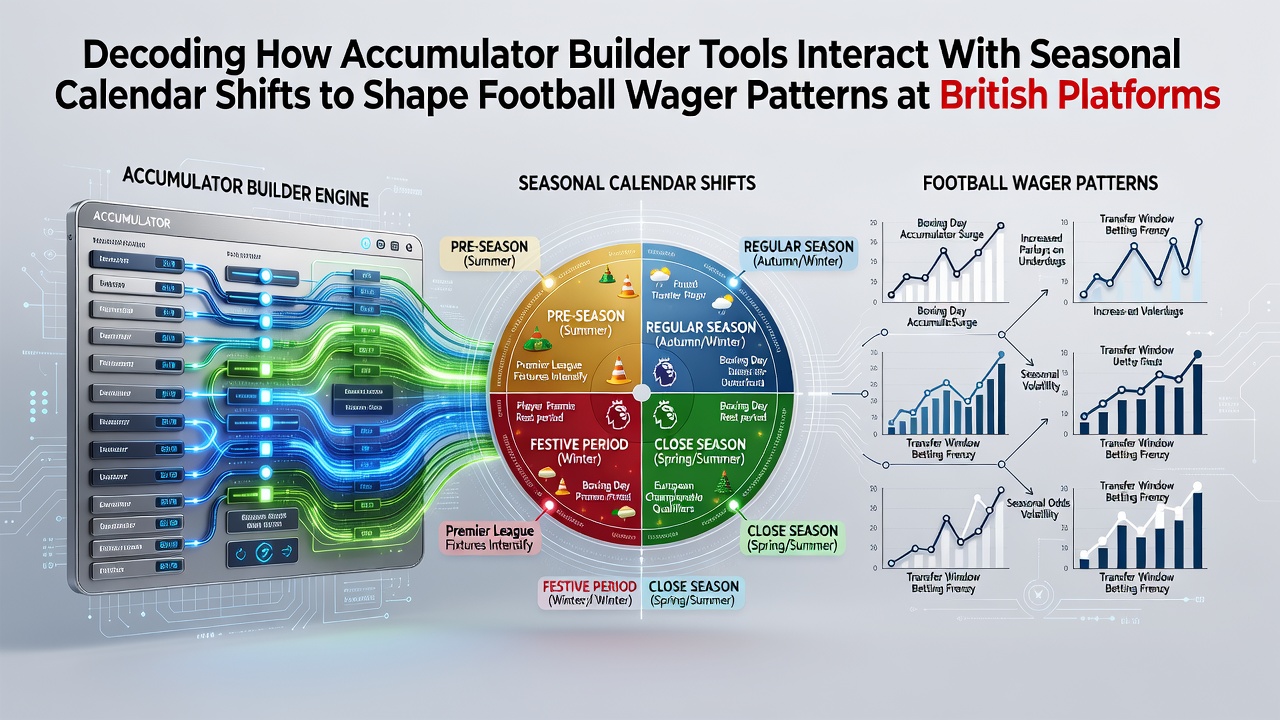
Accumulator Builders and Seasonal Calendar Shifts Reshape Football Wagering Patterns on British Platforms
Accumulator builder tools on British betting platforms allow users to combine multiple football selections into single wagers, and these systems adjust automatically as seasonal calendars move through pre-season friendlies, league openers, and international breaks. Data from industry reports shows that bet volumes on multi-leg football accumulators rise sharply when the English Premier League restarts each August, with patterns shifting again during September international windows when club schedules pause.
Tool Mechanics During Calendar Transitions
Accumulator builders integrate real-time data feeds on team lineups, player injuries, and fixture congestion, which means the available markets expand or contract depending on whether a given weekend features domestic league games or European competitions. Observers note that platforms update these tools within hours of official squad announcements, and this responsiveness influences how bettors construct accumulators across the first few weeks of a new campaign.
Research published by the International Center for Gaming Regulation indicates that selection combinations featuring early-season fixtures often include more defensive statistical props such as clean sheets because historical data from opening weekends shows lower scoring averages compared with mid-season periods. Those who monitor platform activity report that users frequently add or remove legs when calendar changes introduce postponed matches or additional midweek rounds.
August 2026 Season Start and Immediate Effects
August 2026 marks the beginning of the 2026/27 domestic season, and betting records from previous years demonstrate that accumulator activity surges in the opening fortnight as fresh squad data becomes available. Platforms refresh their builder interfaces with updated odds for new signings and managerial changes, which in turn alters the combinations that appear most frequently in completed wagers.
Figures reveal that four-leg and five-leg football accumulators account for a larger share of total volume during the first month after the summer break, whereas three-leg combinations gain traction once mid-season congestion sets in. The shift occurs because fixture lists lengthen with the addition of cup competitions, prompting users to refine selections around rest advantages and travel distances.
Here's where the data becomes particularly clear: external tournament calendars, including UEFA club competitions, intersect with domestic schedules and force accumulator builders to recalibrate available props on player performance metrics. Bettors respond by favoring selections tied to teams with favorable early fixtures, a pattern confirmed across multiple seasons.

International Breaks and Pattern Adjustments
International breaks in September and October introduce different dynamics because club teams lose key players to national duty, and accumulator builders reflect these absences through adjusted odds on goal scorers and assist markets. Studies from the Australian Gambling Research Centre have tracked similar calendar-driven changes in other football markets, showing that multi-leg wagers decline when fewer reliable data points exist for player availability.
British platforms respond by expanding alternative selections such as corner counts and card markets, which maintain accumulator volume even when star forward props become less predictable. Those monitoring user behavior note that the proportion of accumulators built around set-piece outcomes increases during these windows compared with regular league weekends.
Platform Data and Market Responses
Platform operators publish aggregated statistics showing that accumulator completion rates vary by month, with the highest success percentages appearing in August when fewer matches carry the uncertainty of European travel. Yet the volume of completed wagers grows steadily through autumn as more fixtures enter the calendar and builders incorporate additional statistical filters.
Industry reports from the European Gaming and Betting Association highlight that seasonal shifts also affect promotional structures tied to accumulators, such as boosted odds on specific leg counts, and these offers further shape the combinations users choose during different phases of the season. European Gaming and Betting Association reports document consistent year-on-year growth in football accumulator activity aligned with fixture density increases.
Longer-Term Seasonal Trends
As the season progresses into winter months, accumulator builders adapt to weather-related factors and fixture pile-ups by surfacing more under/over markets and handicap options. Data indicates that users begin favoring accumulators built around total goals rather than specific team outcomes once congestion peaks, a shift that aligns with historical scoring trends in December and January.
Those who analyze platform logs observe that the average number of legs per accumulator decreases slightly during periods of high fixture frequency because bettors incorporate greater caution around fatigue variables. The tools themselves flag these considerations through highlighted statistics on recent match counts for each squad.
Conclusion
Accumulator builder tools on British platforms continuously integrate seasonal calendar data to present relevant markets, and wager patterns adjust accordingly as fixtures move through league restarts, international breaks, and European campaigns. Records from multiple seasons demonstrate measurable changes in leg counts, market types, and completion volumes that correspond directly to these calendar movements, providing a clear framework for understanding how football betting activity evolves throughout the year.