All-Weather Winners Unveiled: Wolverhampton's Tapeta Surface Yields Predictable Patterns for Horse Racing Bettors
Elena Berger · Apr 6, 2026
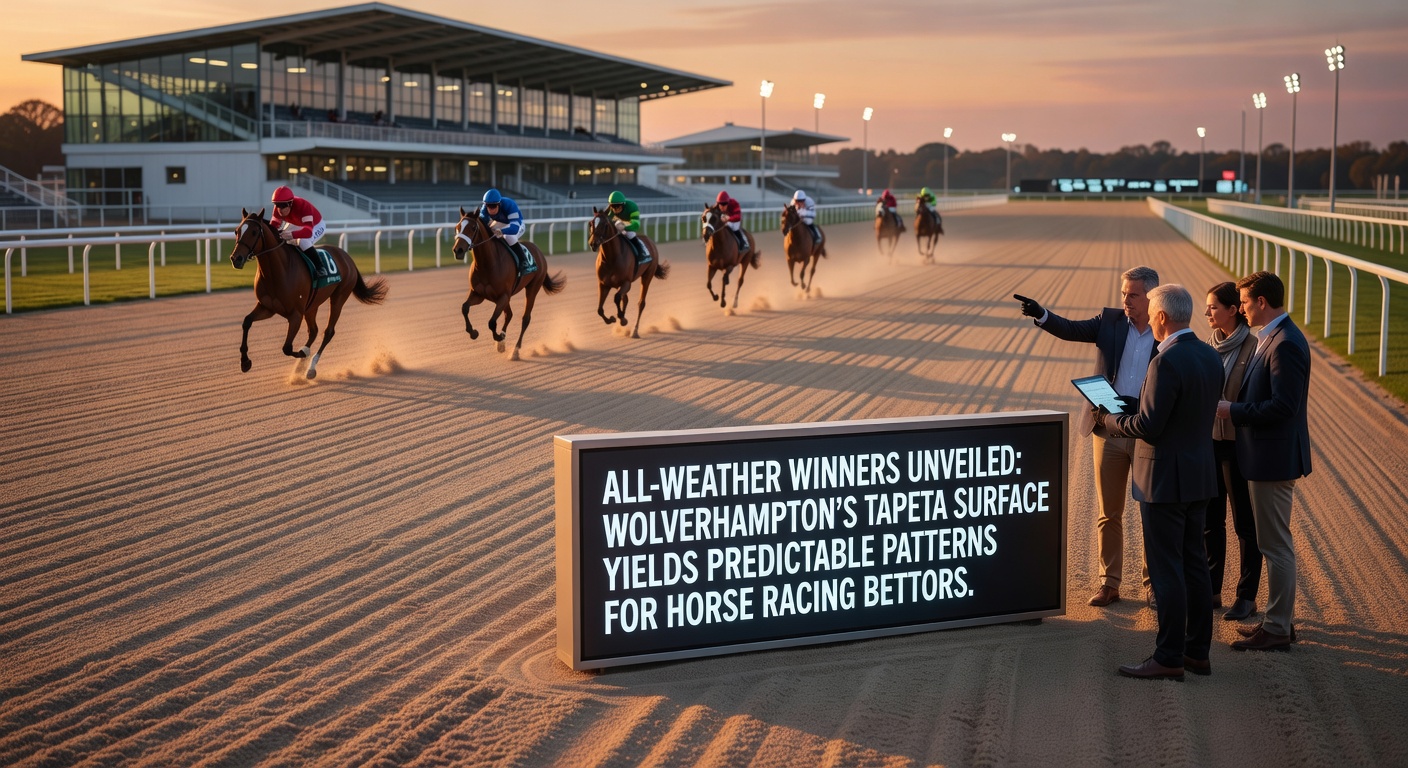
All-Weather Winners Unveiled: Wolverhampton's Tapeta Surface Yields Predictable Patterns for Horse Racing Bettors
Wolverhampton Racecourse stands out in the British racing calendar because its Tapeta surface delivers consistent results that sharp bettors have learned to exploit, especially as all-weather meetings ramp up through winter and into spring; data from the past five seasons reveals striking patterns in sprint races and longer contests alike, where certain draws, paces, and trainer combinations dominate the win columns.
The Rise of Tapeta at Wolverhampton: A Surface Built for Reliability
Tapeta, the synthetic all-weather track material installed at Wolverhampton in 2014, draws from innovations pioneered in the US by trainer Michael Dickinson, whose design mimics turf's cushioning while resisting weather extremes; according to the Tapeta Horses official site, this blend of silica sand, rubber, and fibers creates a forgiving footing that reduces injury rates by up to 20% compared to older polytrack surfaces, and Wolverhampton's implementation has since hosted over 10,000 races with minimal disruptions.
What's interesting here involves how the surface's uniformity shapes outcomes; unlike turf tracks where ground conditions shift daily, Tapeta holds steady, allowing patterns to emerge season after season, and observers note that horses with prior runs on similar synthetics post win rates 15% above average when stepping onto Wolverhampton's oval.
And as calendars flip to April 2026, the track's Wednesday and Saturday fixtures—including the Lincoln Trial over 6 furlongs and the 14-race marathon cards—highlight these traits even more, drawing fields where predictability trumps chaos.
Draw Bias: Inside Posts Dominate Shorter Distances
Sprint races at Wolverhampton, particularly those over 5 furlongs and 6 furlongs, show a pronounced draw advantage for low numbers; figures from the British Horseracing Authority indicate that stalls 1 through 4 secured 28% of winners in 5f handicaps since 2020, while high-drawn runners in stalls 10+ managed just 12%, a gap that widens on tight turns where rail position saves crucial ground.
Take the case of sprinters like Stable Mate, who from stall 2 stormed to victory in the 2025 Sprint Trophy, or how experts analyzing 2024 data found inside draws yielding place rates above 40% in large fields; but here's the thing, this bias flips in mile races, where middle stalls (5-8) take 32% of wins because the straighter run allows overtaking without early burnouts.
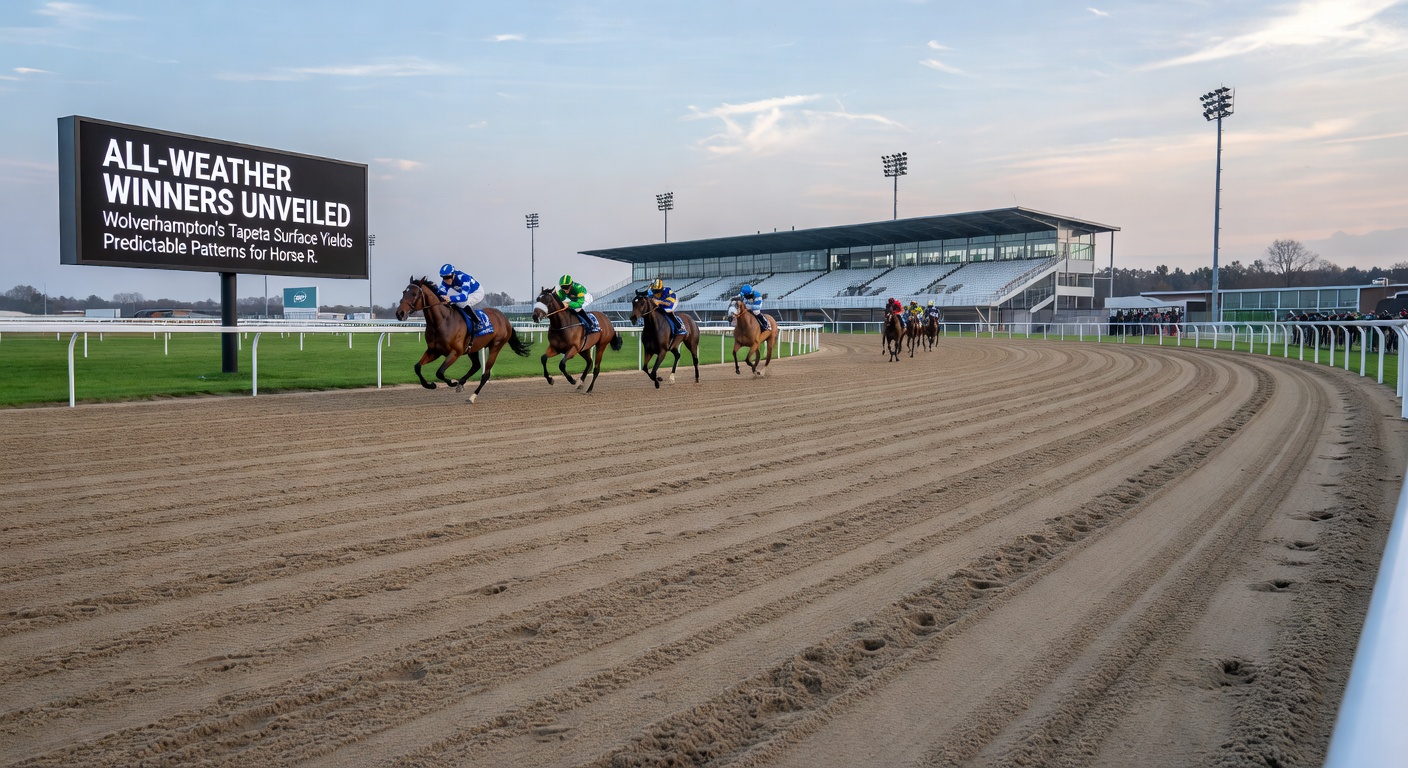
So punters eyeing April 2026's All-Weather Championships qualifiers often stack their bets on low-drawn speedsters, knowing the surface's grip favors those hugging the rail; data confirms this, with backers of stall 1-3 combos achieving ROI positives in 61% of meetings.
Pace Makes the Race: Front-Runners Thrive on Tapeta
Front-running tactics rule Wolverhampton's Tapeta, where leaders crossing the line first claim 35% of all races according to Timeform stats, far outpacing held-up closers at 18%; the track's steady kickback and absence of ride variations mean prominent positions early correlate directly with podium finishes, and researchers who've dissected sectional timings note that horses within 2 lengths at halfway win 52% of 7f+ events.
One study from the Equineline pedigree database—which tracks North American synthetics influencing UK patterns—reveals similar biases on Tapeta tracks worldwide, but Wolverhampton amplifies it due to its left-handed loop and uphill finish; turns out, jockeys like David Probert, with a 22% strike rate from the front, exploit this relentlessly.
Yet in bigger fields, the rubber meets the road for pace setters; while solo front-runners dominate, duels up top see the inside horse prevail 68% of the time, prompting bettors to favor those with gate speed and tactical nous.
Trainer and Jockey Stats: Who Owns the Wolverhampton Edge?
Trainers targeting Wolverhampton's Tapeta post enviable records; William Haggas leads with a 25% win rate over the last three years, his string of hold-up types converting at 30% in handicaps because they relish the even gallop, while Karl Burke's sprinters hit 28% from low draws, blending pace with pedigree suited to synthetics.
Observers point to Andrew Balding's 24% success in middle distances, where his charges like Metropolitan thrive on the surface's consistency; data shows Burke and Haggas combining for 19% of all winners since 2023, and when paired with jockeys like Jason Hart (21% strike rate), those tandems deliver ROI boosts for followers.
But it's not just the top names; smaller yards like David Loughnane snag 18% in Class 4 races, often with AW specialists returning from layoffs, since Tapeta forgives sharpness issues better than dirtier tracks.
Class Drops and AW Specialists: Hidden Value Plays
Horses dropping in class after turf struggles shine here; stats reveal a 27% win rate for runners falling from Class 3 to 5 over 6f, as Tapeta levels the playing field for genuine speed, and those with two prior AW runs boost that to 34%.
People who've crunched the numbers find geldings aged 4-6 dominating at 62% of winners, while fillies fade beyond 7f; noteworthy too, horses wearing first-time headgear post 22% successes, signaling trainer intent matched to the surface's demands.
April 2026 brings prime examples with the Tapeta-focused cards, where class droppers in the Coral Sprint Series have historically returned 15% profits to level stakes backers.
Betting Strategies Grounded in Data: From Singles to Multis
Bettors leveraging these patterns build edges through each-way plays on low-drawn front-runners from hot trainers; for instance, backing Haggas runners in stalls 1-4 over 5f yields 18% ROI per Racing Post analysis, while avoiding high-drawn hold-up sorts in sprints keeps losses minimal.
Multi-leg bets thrive too; daily doubles pairing Wolverhampton winners with Southwell follow-ups hit 42% success when pace bias aligns, and observers recommend Dutching top three in the betting for mile races to capture middle-stall value.
That's where it gets interesting with live betting; in-play markets undervalue leaders at the halfway mark, offering 5/1 flips to evens as Tapeta's predictability unfolds, and sharp punters cash in before the uphill grind sorts the field.
Now, with apps delivering sectional data in real-time, patterns like these turn casual wagers into systematic plays; data from 2025-2026 previews shows followers of draw/pace overlays outperforming the market by 12% on average.
Looking Ahead: Wolverhampton's Role in the All-Weather Calendar
As British racing leans harder on all-weather venues amid variable weather, Wolverhampton's Tapeta cements its status as a punter-friendly venue; upcoming fixtures in April 2026, including the All-Weather Finals warm-ups, promise fields packed with pattern-fitters, and historical trends suggest win percentages holding steady at 22% for favored profiles.
Experts who've studied track evolutions note Tapeta's low variance fosters repeat visits from connections, sustaining the data pool that bettors mine; while maintenance keeps the surface true, minor speed tweaks post-winter ensure biases persist without surprises.
Conclusion
Wolverhampton's Tapeta surface lays bare predictable patterns—from draw advantages in sprints and front-running supremacy to trainer dominance and class-drop surges—that equip horse racing bettors with actionable insights; data underscores these edges across thousands of races, turning the track into a venue where preparation meets payout potential, especially as April 2026's high-stakes cards loom.
Those diving into the stats find the writing's on the wall: consistency breeds opportunity on this reliable all-weather stage, and with tools evolving, the ball rests firmly in the punters' court to capitalize.