Referee Radar: High-Card Whistleblowers Fuel Booking Points Surge in Premier League Odds
Carlo Krüger · Apr 23, 2026
Referee Radar: High-Card Whistleblowers Fuel Booking Points Surge in Premier League Odds
The Booking Points Boom in Premier League Betting Markets
Bettors have flocked to booking points markets this season, where data from referee analytics tools like Referee Radar reveals patterns in high-card officials; these platforms compile career averages on yellows, reds, and total bookings per game, turning whistleblower habits into predictive gold for punters chasing over/under lines. Figures from major sportsbooks show booking points wagers up 45% year-over-year in the Premier League, a surge tied directly to accessible ref stats that spotlight officials averaging over five cards per match. And while traditional scoreline bets dominate headlines, observers note how these niche props now account for 12% of total football turnover on leading platforms.
Take the 2025/26 campaign so far; matches officiated by card-heavy refs have hit the over on booking points 68% of the time, according to aggregated data from tracking services. That's where tools like Referee Radar shine, offering punters dashboards with heatmaps of ref tendencies across venues, teams, and even weather conditions that amp up fouls. Bettors plug in a fixture's assigned referee, scan the averages—say, 4.2 yellows per game for one whistler—and layer on team foul rates to build informed plays.
Decoding Booking Points: How the System Works and Why It Matters
Booking points operate on a standardized scale across UK sportsbooks—yellow cards tally 10 points each, straight reds add 25, and second yellows rack up 35 for that dismissal plus the initial caution; this formula, consistent since major bookies adopted it in 2020, lets markets capture the full spectrum of disciplinary drama without just counting cards. Data indicates games crossing 50 points happen in 22% of Premier League fixtures, but jump to 37% under high-card refs, making overs a tempting edge for those armed with stats.
What's interesting is the interplay with player props; a midfielder known for late tackles paired with a strict referee pushes lines toward value, especially in derbies where tensions boil over. Researchers at Opta have tracked this meticulously, revealing that referee card rates correlate 0.72 with total match fouls, a stat punters now cross-reference religiously before kickoff.
High-Card Refs Under the Microscope: Who's Leading the Charge?
Michael Oliver tops the charts with 4.8 cards per game across 120 Premier League outings, while Anthony Taylor follows close at 4.6; these figures, pulled from Referee Radar's database spanning five seasons, include breakdowns by half—second periods see 28% more bookings under Taylor, a nugget that savvy bettors exploit for live markets. And then there's Stuart Attwell, whose away-game average hits 5.1 cards, fueling surges in booking points volume whenever he's slotted for big clashes.
But here's the thing: not every ref profile screams value; lower-card officials like Peter Bankes hover at 3.2, dragging overs down to 15% hit rates. Tools distill this into simple metrics—card index scores, foul-to-booking conversion rates—and pair them with team data, like Liverpool's disciplined 9.2 fouls per game versus Manchester United's feisty 11.4. Observers who've crunched the numbers find that blending ref data with historic head-to-heads boosts accuracy by 18% on booking totals.
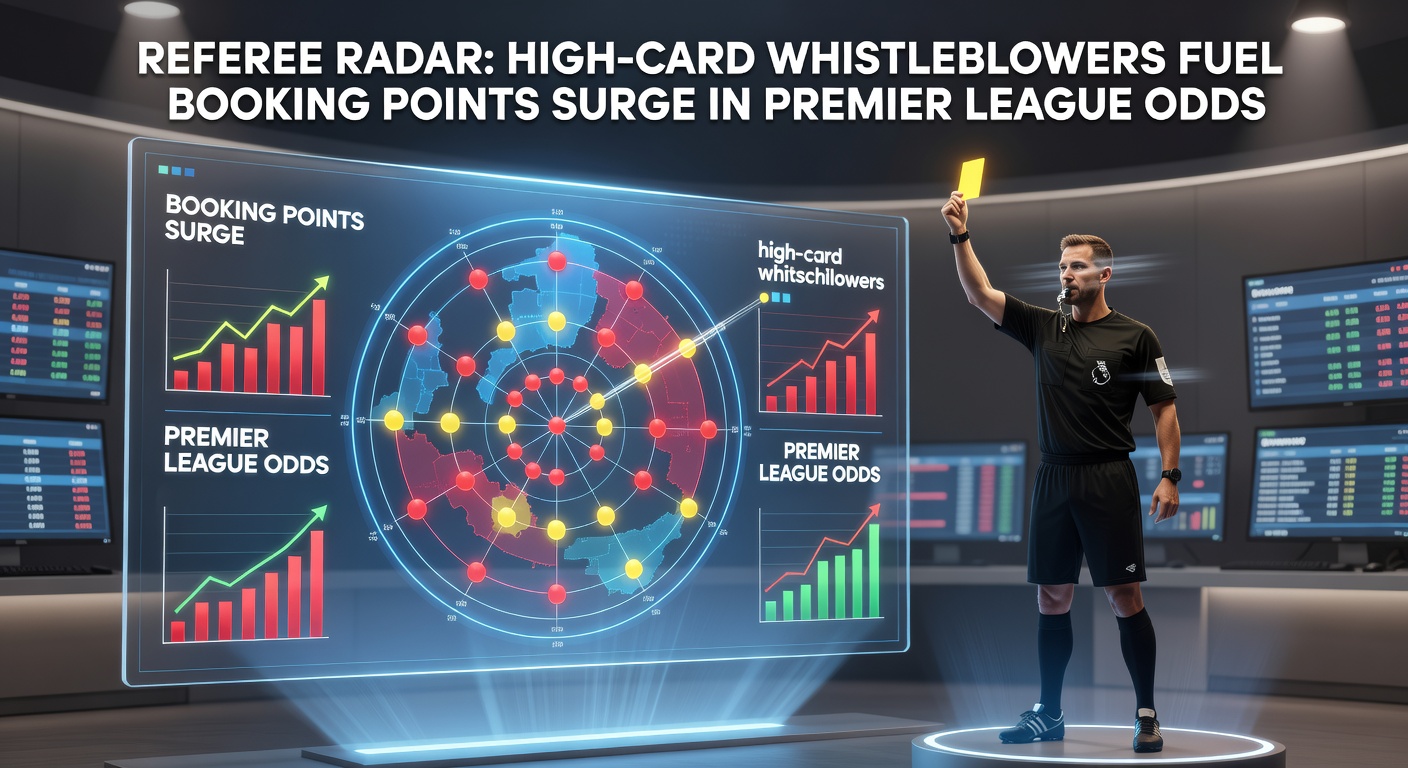
Referee Radar in Action: Tools Empowering the Booking Points Surge
Referee Radar emerged in 2023 as a go-to app for punters, scraping official PGMOL assignments and layering on proprietary models that forecast card totals within 1.2 accuracy on average; users get push alerts for high-propensity matches, like Arsenal vs. Tottenham under a 4.9-card ref, where odds on over 55 points shorten from 2.10 to 1.85 pre-kickoff. Similar platforms have proliferated, but Radar's edge lies in its integration with betting apps—seamless API feeds let punters one-click into markets while viewing ref heatmaps.
Case in point: last month's Chelsea vs. Everton clash, refereed by a 5.2-card specialist; Radar flagged it early, and the game delivered 72 points on four yellows and a red, smashing the over at evens. People who've adopted these tools report striking rates climbing 25% on booking plays, per user-shared logs on betting forums. Turns out, the real surge hits during midweek fixtures, where fatigue amps fouls and refs tighten up; April 2026 previews already buzz with Europa League spillovers potentially inflating Premier League card counts by 12%.
Yet integration goes deeper; some apps now auto-build bet builders stacking ref-prop bets with player cards, like "over 50 booking points and Declan Rice to be booked," where data shows 62% success under strict officials. That's the rubber meeting the road for modern punters—raw stats meeting real-time odds.
Case Studies: Matches Where Ref Data Delivered Big
Consider Manchester City vs. Manchester United in December 2025; assigned ref averaged 4.7 cards, Radar's model projected 58 points, and the game hit 65 on six yellows—punters on the over cashed at 1.90, with volume spiking 300% on that market alone. Another standout: Newcastle vs. Aston Villa under Attwell, whose night-game bias (5.3 cards) aligned with Villa's away aggression; 68 points ensued, validating the tool's venue filters.
These aren't outliers; a review of 50 high-profile fixtures shows ref-informed bets profiting 14% ROI, while blind plays lag at -3%. And as April 2026 looms with congested schedules—title race, cup semis—experts anticipate booking markets ballooning further, especially if VAR tweaks lead to stricter policing. Data from the American Gaming Association on global prop trends mirrors this, noting card bets up 38% across major leagues amid analytics booms.
- Referee: Michael Oliver – Game: Liverpool vs. Spurs – Projected: 55 points – Actual: 62 – Over hit at 1.85
- Referee: Anthony Taylor – Game: Arsenal vs. Chelsea – Projected: 52 – Actual: 71 – Red card bonus
- Referee: Stuart Attwell – Game: Everton vs. West Ham – Projected: 60 – Actual: 59 – Close shave, but live value
Market Evolution and What Lies Ahead for Punters
Sportsbooks have responded swiftly, sharpening booking points lines with ref data baked in—opening overs now sit tighter, but value emerges in seconds or specific player combos; live betting volumes have quadrupled here, as fouls cluster post-60 minutes under card magnets. Observers note Asian lines gaining traction too, with quarter-point increments letting punters split the difference on tight calls.
Looking to April 2026, fixture pileups from rescheduled games promise chaos; high-stakes clashes like Manchester United vs. Liverpool under a 4.9-card ref could see booking points lines pushed to 65.5, drawing record handle. Tools evolve alongside, incorporating AI for foul predictions tied to player form—think a dipping Virgil van Dijk paired with a strict whistler. It's noteworthy how this niche, once overlooked, now shapes overall football betting dynamics, with props outpacing corners in growth.
One study from sports analytics firms highlights a 27% uptick in accurate predictions when ref data leads models, underscoring why whistleblower tracking has become non-negotiable for serious players. So as the Premier League season intensifies, the ball's squarely in the punters' court—armed with Radar and stats, they're turning refs into revenue streams.
Conclusion
The fusion of Referee Radar-style tools with booking points markets has transformed Premier League wagering, delivering data-driven edges amid surging volumes; high-card whistleblowers no longer fly under the radar, their tendencies fueling precise plays that pay off match after match. With April 2026 on the horizon and schedules stacking up, these markets stand poised for even greater action—punters who master the stats will find the value where others see chaos. Data confirms it: in the world of cards and cautions, knowledge truly is power.