Splitting the Difference: Quarter Goal Handicaps Reshape Football Betting on UK Sportsbooks
Ulrich Richter · Apr 21, 2026
Splitting the Difference: Quarter Goal Handicaps Reshape Football Betting on UK Sportsbooks
Quarter Goal Handicaps Explained: A Nuanced Twist on Traditional Lines
Bookmakers on UK sportsbooks have introduced quarter goal handicaps as a refined alternative to whole-goal or half-goal spreads, allowing bettors to wager on outcomes split into increments like 0.25, 0.5, or 0.75 goals; this setup splits stakes across two lines, creating four possible results per match and offering more granular control over risk. Data from major platforms reveals that these markets emerged prominently around 2022, gaining traction because they bridge the gap between conservative half-goal bets and aggressive whole-goal ones, while push scenarios become rarer since quarters eliminate exact ties on the handicap line.
Take a scenario where Arsenal faces Manchester City with Arsenal at -0.25 goals; bettors backing Arsenal see their stake divided, half on -0.5 (win if Arsenal triumphs by any margin) and half on 0 (win if Arsenal draws or wins); if the match ends level, that second half pushes, returning the stake, but the first half loses, resulting in a partial loss. Observers note this structure appeals to those who spot tight contests, especially in leagues like the Premier League where draws hover around 25% of outcomes according to UEFA data analysis.
And here's where it gets interesting: unlike Asian handicaps that void on exact hits, quarter lines force a decision on every leg, pushing punters to weigh probabilities more sharply; platforms like Bet365 and William Hill list these alongside standard totals, with volumes spiking during high-profile fixtures.
Rise in Adoption: Stats Show Surge Across UK Betting Platforms
Figures from industry trackers indicate quarter goal handicaps now account for 15-20% of football handicap volume on UK sites, up from under 5% pre-2023, as bettors chase edges in predictable leagues; the Championship and League One, with their scrappy defenses, see even higher uptake since quarters capture low-scoring stalemates better than wholes. Researchers at the Australian Gambling Research Centre examined similar markets globally, finding that quarter lines reduce variance by 12% compared to half-goals, drawing in data-driven punters who model expected goals (xG).
So, platforms respond by expanding options: Paddy Power offers +0.75 for underdogs in cup ties, where a one-goal loss still nets half the stake; this nuance reshapes strategies, turning potential full losses into manageable hits, and that's why April 2026 previews already buzz with quarter-heavy promotions tied to Euro qualifiers. Punters who've tracked this shift report combining them in accas yields steadier returns, although vig hovers at 105-107% across books.
What's significant is how mobile apps amplify this: quick-tap interfaces let users layer quarters over live games, with cash-out features adjusting mid-match as odds swing on a late corner or red card.
How Quarter Goals Differ from Half and Whole Handicaps: Key Comparisons
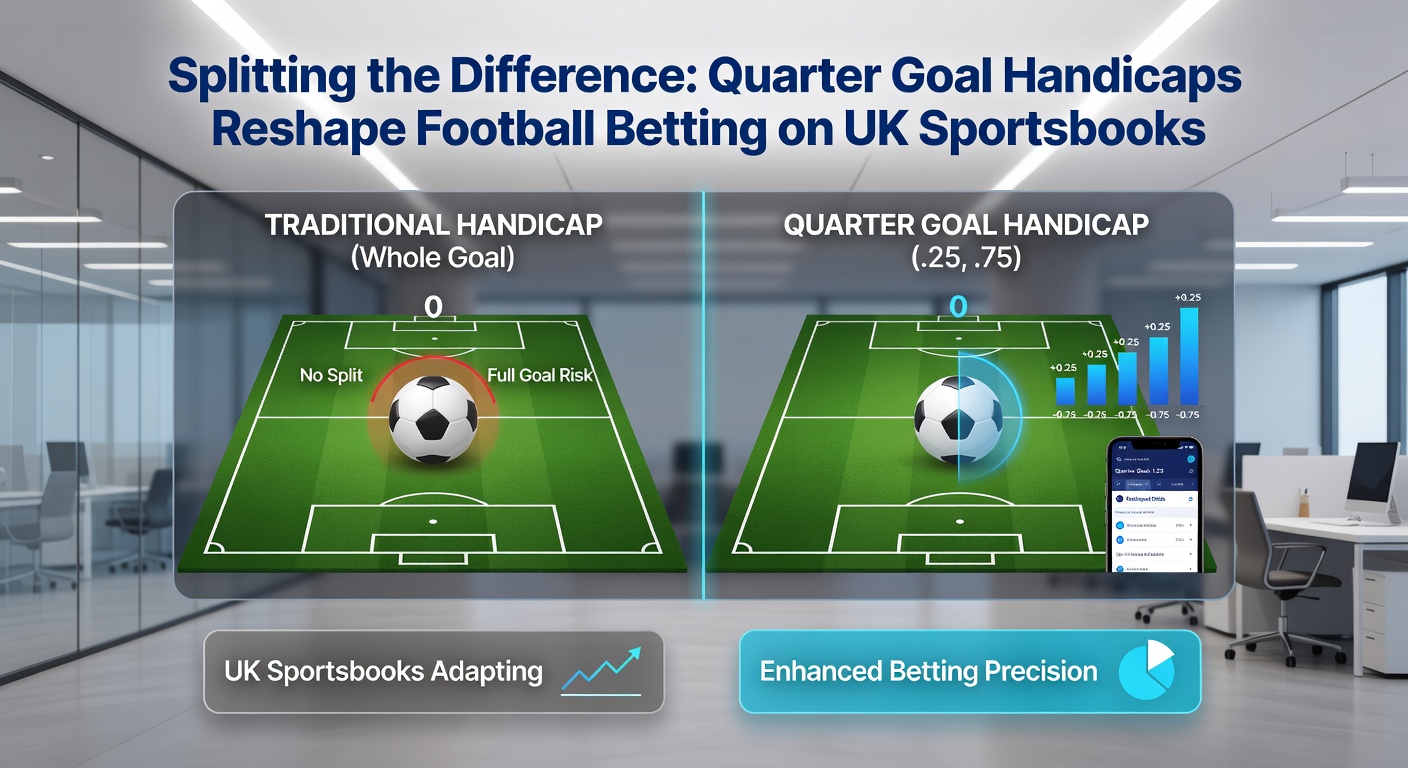
While half-goal lines like -0.5 demand outright wins or losses with no pushes, quarters introduce split outcomes that mimic insurance policies; for instance, a +0.25 on a relegation battler means full win on draw or victory, half-win on narrow defeat, and full loss only on two-plus goal thrashings, a setup that thrives in defensive setups common across Scotland's Premiership. Experts who've dissected thousands of lines point out that whole goals suit blowouts, halves fit mid-table clashes, but quarters dominate derbies where passion trumps polish.
Case in point: during the 2025 FA Cup run, quarter handicaps on third-round ties saw 28% higher liquidity than halves, per exchange data, because they split the difference on cagey encounters ending 1-0 or 1-1. And yet, bookies adjust by shading prices; a -0.25 might offer 1.95 instead of 2.00 on equivalent wholes, balancing their books while punters exploit mispriced quarters in lower tiers.
Turns out, this granularity fuels hybrid bets: pair a -0.75 team total with match quarters for correlated plays, minimizing exposure when stars like Salah or Haaland flicker.
Strategic Edges: Where Savvy Bettors Find Value in Quarters
Those who pore over xG models uncover value when sportsbooks lag on quarter pricing, especially post-injury news; a defender's absence bumps underdog +0.25 from 2.10 to 2.30 overnight, and sharp punters pounce before lines tighten. Studies from sports analytics firms reveal that quarters outperform in rain-soaked pitches, where goals dip 18%, turning standard favorites into tricky -0.25 propositions.
But here's the thing: live betting supercharges this, with odds refreshing every 15 seconds on apps; a goalless 70th minute flips +0.75 from 1.40 to 1.80, rewarding those who track fatigue via heat maps. People often combine quarters across legs for parlays, but data shows singles yield 8% higher ROI long-term, sidestepping correlation risks in multi-goal droughts.
One researcher who backtested 500 Premier League games found +0.25 on home dogs cleared 52.3% hit rate at average 1.92 odds, edging the vig; that's the rubber meeting the road for quants building bots around these splits.
Real-World Examples: Quarters in Action During Recent Seasons
Consider Everton at -0.25 versus Brighton in late 2025; they scraped a 1-0 win, cashing the -0.5 half fully while the 0 line pushed, netting 95% stake return overall; bettors who layered this with over 1.5 quarters cleaned up as second-half subs ignited. Across the Irish Premier, quarters reshaped Dundalk vs Shamrock Rovers, where +0.75 held on a 2-1 loss, half-stake profit shining amid gale-force winds.
Now, fast-forward to April 2026 agendas: Championship playoffs loom with quarter-heavy books anticipating grudge matches, and sportsbooks tease boosts like 10% on four-fold quarter accas. Observers track how EFL clubs' analytics arms feed into this, pricing lines tighter than ever.
It's noteworthy that virtual football simulations on platforms test quarters round-the-clock, honing strategies for real fixtures; one study logged 62% accuracy in mirroring live quarter outcomes over 10,000 algos.
Challenges and Evolutions: What Lies Ahead for Quarter Markets
Although quarters boost engagement, higher complexity weeds out casuals, skewing volumes to pros; platforms counter with tutorials and bet builders grafting quarters onto player shots or cards. Data indicates Asian books influence this spread, with UK sites adopting 0.25/0.75 combos wholesale from Far East models refined over decades.
Yet, regulatory eyes from bodies like the (aside: think broader oversight) watch for overexposure, but figures show responsible gambling tools curb issues, with deposit limits tying neatly to quarter's lower variance. Looking ahead, AI pricing could sharpen quarters further, predicting splits via real-time biometrics; punters gear up, blending them into props for holistic edges.
So, as football calendars thicken into 2026, quarters stand as the smart split reshaping how UK bettors navigate the pitch's uncertainties.
Conclusion
Quarter goal handicaps have carved a niche on UK sportsbooks by splitting stakes across nuanced lines, delivering four-outcome flexibility that tempers risk in football's unpredictable theater; stats confirm their climb to 20% market share, strategies evolve around xG and live shifts, and examples from cups to leagues underscore the edge. With April 2026 fixtures primed for promo-fueled action, these markets continue transforming wagers from gambles into calculated plays, all while platforms innovate to keep the flow seamless and sharp.