Weather Shifts Prompt Bettors to Rethink Accumulator Tactics at Britain's Diverse Racing Venues
Elena Berger · Jul 2, 2026
Weather Shifts Prompt Bettors to Rethink Accumulator Tactics at Britain's Diverse Racing Venues
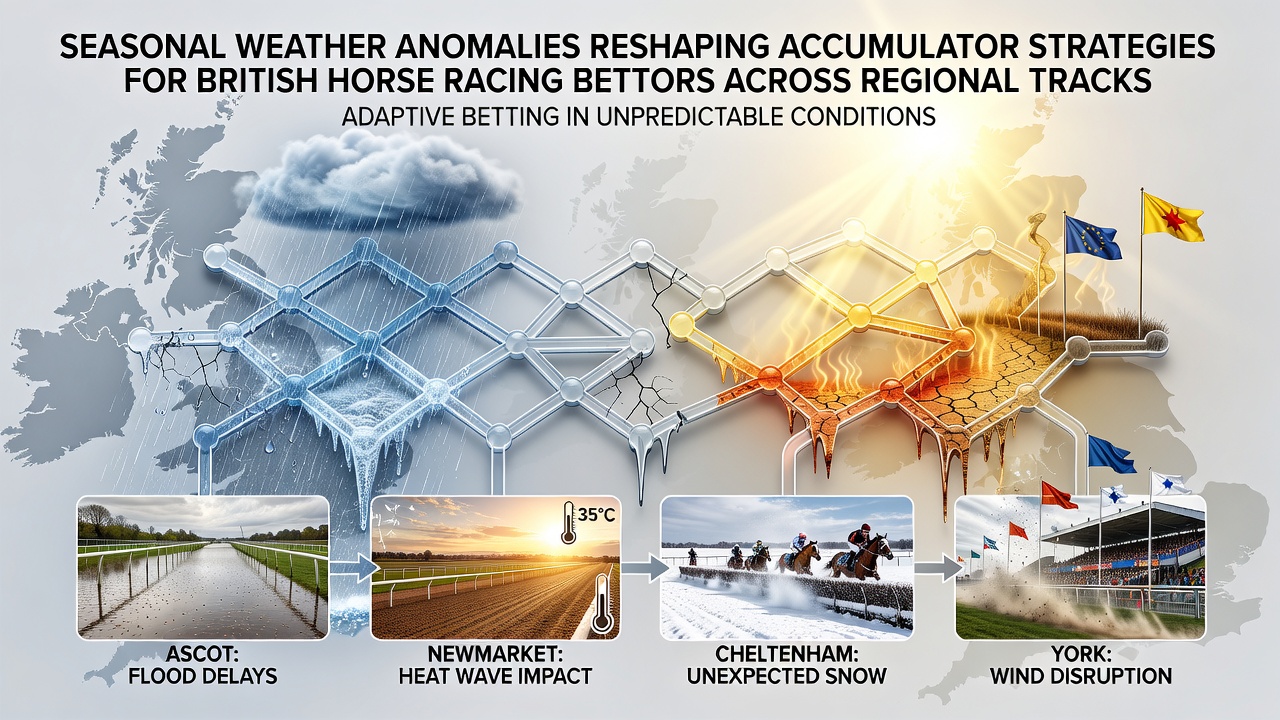
Seasonal weather anomalies have introduced measurable variations in ground conditions at British horse racing tracks, prompting adjustments in accumulator strategies among bettors who combine selections across multiple races and venues. Data from regional fixtures in 2025 and into July 2026 shows increased instances of unseasonal rainfall and temperature fluctuations that alter turf firmness, which in turn influences race outcomes and betting patterns at tracks ranging from northern circuits like Ayr and Musselburgh to southern ones such as Newbury and Sandown.
Accumulators in horse racing typically involve selecting winners or placed horses from several events, often spanning different meetings on the same day or across weekends. When weather deviates from historical averages, the impact registers first in soil moisture levels and drainage responses, which vary by region because of differences in underlying geology and track maintenance practices. Northern tracks with heavier clay content retain moisture longer after rainfall events, while southern chalk-based surfaces drain more rapidly yet become slick under sudden downpours.
Regional Track Responses to Anomalous Conditions
Records compiled by track officials indicate that July 2026 brought above-average precipitation to parts of Scotland and the north of England, whereas the southwest experienced drier spells interspersed with intense short bursts. These patterns diverge from the long-term July means published by meteorological services and have required bettors to recalibrate selections when building accumulators that cross regional boundaries. For instance, a combination featuring horses from both a northern soft-ground specialist meeting and a southern fast-ground card demands separate analysis of each venue's drainage characteristics rather than a uniform speed or stamina assumption.
Observers note that certain trainers have adapted preparation routines in response, shifting horses between all-weather and turf surfaces more frequently during anomalous periods. This movement shows up in entry lists and can alter the composition of popular accumulator bets that rely on stable form lines across consecutive weeks.
Impact on Accumulator Construction
Bettors constructing accumulators have begun incorporating ground-condition filters earlier in the process, checking forecast updates from multiple sources before finalising legs. A selection that appears strong on official ratings can lose value quickly if the projected going changes overnight, particularly at tracks with limited irrigation capacity. Data from past seasons demonstrates that races run on ground officially described as "good to soft" after unexpected rain produce different win-rate distributions compared with the same class of race on "good" ground, with front-runners sometimes disadvantaged on heavier surfaces.
What's notable is the way regional differences compound when an accumulator spans several meetings. A bettor might combine a northern meeting affected by persistent drizzle with a midlands fixture experiencing clear but cooler conditions. The combined probability calculation then requires weighting each leg according to the specific weather signature rather than applying a single adjustment factor across the entire bet.

Data Sources Informing Strategy Adjustments
Information drawn from the National Oceanic and Atmospheric Administration's climate monitoring reports has been referenced by some racing analysts when comparing current anomalies against multi-decade baselines. Those reports highlight increased variability in summer rainfall patterns across northern Europe, which aligns with observations at British racecourses. Similarly, industry bodies such as the Australian Racing Board have published studies on weather-resilient track management that racing participants in other countries have examined for transferable insights, even though soil types differ.
Trainers and owners receive daily ground reports from each venue, yet the timing of these updates relative to betting deadlines creates a window in which informed bettors can refine accumulator legs. When anomalies extend over several days, as occurred in parts of July 2026, the cumulative effect on form can shift the relative merits of horses that prefer different going descriptions.
Practical Examples from Recent Meetings
One documented case involved a mid-July card at a northern track where persistent overnight rain turned the ground softer than forecast, elevating the finishing positions of horses with proven stamina while reducing the success rate of speed-oriented runners. Bettors who had included those speed horses in multi-race accumulators saw reduced returns compared with those who adjusted selections after the revised going report. A contrasting example emerged at a southern venue during the same period, where drier conditions preserved a faster surface and rewarded different profiles of horse.
These divergences illustrate why some accumulator builders now segment their bets by expected regional weather clusters rather than treating all British turf racing as a single market. The approach involves grouping legs according to shared meteorological influences before combining them into larger bets.
Conclusion
Seasonal weather anomalies continue to register measurable effects on ground conditions at British regional race tracks, prompting systematic adjustments in how accumulators are assembled. Bettors reference updated forecasts, historical drainage data, and regional going patterns to refine selections, while trainers adapt preparation and travel plans accordingly. The result is a more segmented approach to multi-race betting that accounts for venue-specific responses to the same broad weather events.